
Quit smoking
Times of reflection are coming, a new year for many means setting new goals and objectives, both on a personal and professional level; and one of the most common objectives is to abandon the habit that most damages your health.
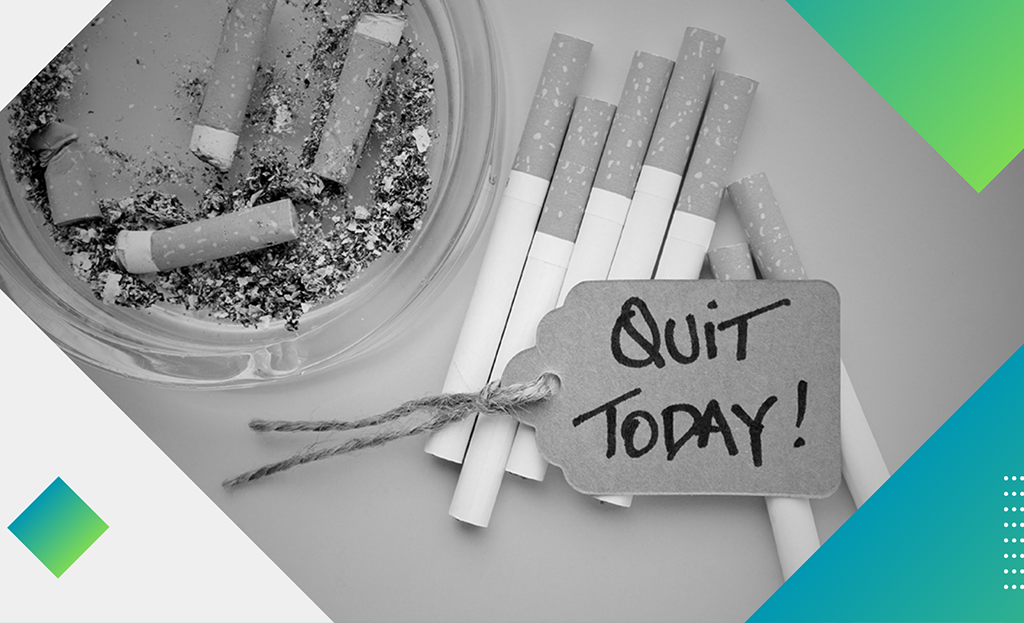
Exactly, we’re talking about quitting tobacco.
history of tobacco
Man’s use of different substances by inhalation dates back to the origin of civilization.
The cultivation of the tobacco plant, native to America, has spread throughout the world.
With this, the habitual consumption of cigarettes and other forms of inhalation consumption has become a public health problem worldwide.
Nicotine
The high addictive capacity of nicotine combines with the economic interests of the tobacco industry to make this serious problem a difficult solution.
Effects of tobacco
- Smoking is an addictive and chronic disease, characterized by the presence of relapses throughout its evolution.
- It is the first preventable cause of death and premature death in all developed countries.
- The vast majority of current smokers have started in adolescence due to erroneous beliefs and the fact of smoking.
- Advertising, accompanied by social normality in smoking, also influences.
Consequences of tobacco
The association of tobacco with various respiratory diseases is well known, among which are:
- Chronic obstructive pulmonary disease (COPD)
- Lung cancer
- Asthma
- Infections (pneumonia, viriasis, tuberculosis)
- Pneumothorax
- Langerhans cell histiocytosis
- Respiratory bronchiolitis with/without interstitial disease
- Desquamative pneumonia
- Pulmonary fibrosis combined or not with emphysema, among others.
In recent years we have been witnessing the growth of different emerging forms of nicotine consumption, in adults and young people, such as vaping using electronic cigarettes (e-cigarettes), the water pipe (water pipe, hookah, sisha), rolling tobacco. , Swedish snus, chewing tobacco and heat not burn tobacco.
La reciente introducción de este producto merece una especial atención:
Electronic cigarettes
In this case, an electronic device (different from the e-cigar) heats the tobacco mixed with glycerin, fibers and guar gum to a temperature of 300-350 ◦C without reaching the combustion of a conventional cigarette, which is achieved at 800-1,000◦. .
It is possible that some of them contain less toxins than conventional tobacco, but in no case can they be considered safe, since what is truly safe is non-consumption.
Health authorities have repeatedly expressed the risk that the emergence of “safety” or “low risk” messages on tobacco products entails for these control strategies.
Adolescent users of Juul® (a type of pod that contains high amounts of nicotine) have urinary cotinine levels that almost double those found in conventional cigarette smokers
This confirms that these devices are the gateway to nicotine addiction.
And, although tobacco companies insist that their devices replace conventional cigarettes, the reality is that smokers become dual users (conventional and electronic cigarettes).
The studies carried out on electronic cigarettes and IQOS® allow us to ensure that it is quite likely that the emission of toxins is lower than with conventional cigarettes.
However, what is certain is that safety in the short, medium and long term is not guaranteed.
Passive smoker
It has been shown that there is a proven risk for people who passively inhale the fumes and vapors of these devices.
It should be noted that the comparison of toxicity should not be made between conventional cigarettes and these devices, but rather between the use of these devices and the absence of consumption of any type of tobacco.
Regarding the effectiveness of the electronic cigarette in quitting tobacco, there is not enough scientific evidence (randomized, double-blind, placebo-controlled clinical trials without methodological deficiencies and more rigorous observational studies) to conclude that the electronic cigarette helps to quit. of smoking.
Professional assistance to quit smoking
Health professionals are obliged to correctly diagnose and treat smokers to help them quit.
Currently we have sufficient scientific evidence to show that the only safe and effective treatment to help quit smoking is the use of drugs:
- Cytisine, nicotine replacement therapy and bupropion
- Psychological counseling.
The approach to smokers should begin with a clinical history that also includes specific aspects of smoking and associated diseases.
It is important to know the type of smoker since not everyone has considered quitting smoking.
The treatment will be different and individualized depending on:
- From the degree of smoking (pack-year index = number of cigarettes smoked each day X number of years smoking / 20)
- The stage of change.
- The smoking evaluation protocol.
Motivated people who want to make an attempt to quit smoking will be offered to enter a smoking cessation program.
All smokers who make a serious attempt to quit should receive two types of intervention:
- Behavioral: psychological dependence that they may suffer from.
- Pharmacological: physical dependence on nicotine.
Nicotine replacement therapy (NRT), bupropion and cytisine are the first-line pharmacological treatment for smoking cessation.
Quitting tobacco depends on you
NRT is based on “weaning” the patient to nicotine and is defined as:
“The administration of nicotine to smoking subjects by a route other than cigarette consumption and in a dose sufficient to avoid withdrawal syndrome, but insufficient to generate dependence.”
Indicated for smokers who are motivated to quit smoking and consume more than 10 cigarettes a day. Treatment is recommended for 8-12 weeks.
Commercial solutions to quit tobacco
Forms of presentation:
Chewing gum (2 and 4 mg), lozenges (1.5 mg), patches (7.14 and 21 mg), nebulizer, inhaler.
Bupropion
It is a second generation antidepressant that acts on neurotransmitters involved in nicotine addiction.
Modifies the release of dopamine in the ‘reward’ pathway (mesolimbic system); and alters noradrenergic activity in the ‘withdrawal’ pathway (locus coeruleus).
It has been available since 1989 in the USA. It was approved by the FDA (Food and Drug Administration) in 1997 and in Spain since 2000. Anecdotal reports of spontaneous cessation of tobacco in patients with depression being treated with bupropion, launched the clinical development in this indication.
Presentation forms: tablets with 150 mg of bupropion.
It is a 2-month treatment, but can be extended up to 1 year. It is important to complete all treatment due to the possibility of late success.
Cistina
The chemical structure of cytisine is similar to that of nicotine. It competes with nicotine for the same receptors and gradually displaces nicotine by having a stronger binding. It prevents nicotine-dependent activation of the mesolimbic dopaminergic system and moderately increases the level of dopamine in the brain, alleviating the core symptoms of nicotine withdrawal.
Presentation form: 1.5 mg tablets.
Within smoking care programs, it is essential to establish close monitoring to reinforce the achievements achieved and ask about possible adverse effects of the indicated treatments and prevent relapses.
During the follow-up it is important to congratulate and express interest in the achievements achieved, ask about improvements produced, track any difficulties that have arisen and schedule follow-ups.
Relapses are more frequent during the first 6 months, and it is essential to help the subject identify them, avoid them and, if they occur, confront them by establishing strategies to avoid future relapses.
The approach to smoking should be carried out by health professionals with extensive experience in the monitoring and treatment of smoking.
This document has an informative objective on the general care of smokers and the treatment of smoking in the general population.
There are special populations (adolescents, pregnant women, patients with cardiovascular risk, psychological-psychiatric problems, COPD, hospitalized subjects, subjects with other addictions or other forms of nicotine consumption, etc.) that require a different approach and that are subsidiary to treatment and follow-up in Specialized Tobacco Addiction Units.
Source: Centro Andaluz Alfa 1