
Breathe well
We breathe around 20,000 times a day.
Breathing is an automatic and involuntary physiological process that begins at birth and ends at death.
It is key to our survival, which is why we never stop doing it.
During this process, the body’s cells are nourished with oxygen, and we expel it in the form of carbon dioxide.
Conscious breathing
Breathing is an automatic bodily function, but when it becomes a conscious act, it can transform into a powerful tool for physical and mental balance.
Despite being an automatic process, we can modify it; changing the way we breathe can bring benefits to our physical and mental health.
The importance of knowing how to breathe properly
Pursue your well-being
A large portion of the population breathes shallowly and rapidly, making their chest rise and fall. However, it’s important to know that this limits the body’s oxygen intake and activates the sympathetic nervous system, in addition to generating muscle tension.
Most people breathe shallowly, rapidly, and primarily through their chest.
This type of breathing limits the body’s oxygen intake, activates the sympathetic nervous system (associated with stress), and generates muscle tension.
Therefore, some people often experience stress and anxiety, frequently caused by this incorrect breathing pattern.
The importance of knowing how to breathe
Learn to breathe
Learning to breathe efficiently is a simple, accessible tool with proven effects on overall well-being.
In other words, deep, conscious breathing activates the parasympathetic nervous system, which induces relaxation, regulates heart rate, and promotes mental clarity.
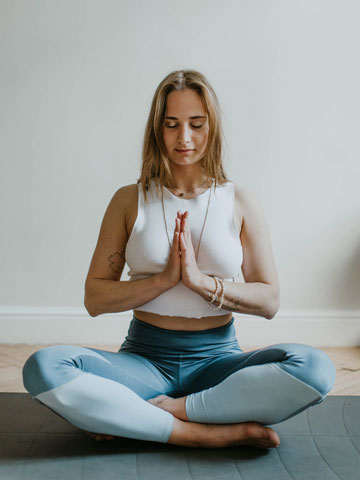
Conscious breathing
More and more healthcare professionals are integrating these practices into complementary treatments.
Main benefits of conscious breathing
- Stress and anxiety reduction: Slowing the breathing rate decreases the activity of the sympathetic nervous system.
- Improved concentration and attention: Focusing the mind on breathing helps reduce mental distraction.
- Greater emotional control: It facilitates the management of impulsive reactions and promotes a state of inner calm.
- Reduced muscle tension: Deep breathing naturally relaxes the body.
- Improved oxygenation: By fully utilizing the lungs, gas exchange and cellular energy are enhanced.
- Better sleep: Incorporating breathing techniques before bed can help you fall asleep and improve sleep quality.
Conscious breathing in holistic health
Increasingly, healthcare professionals are integrating these practices into complementary treatments to address disorders such as:
- Chronic stress and generalized anxiety.
- High blood pressure.
- Tension headaches.
- Stress-related digestive disorders.
- Persistent fatigue or insomnia.
This demonstrates that breathing is much more than a biological function: it is a therapeutic resource of great value.
3 exercises to breathe well
Deep breathing
This is one of the simplest breathing techniques, designed to induce a calm and relaxed state of mind.
It consists of inhaling through the nose for about 4 seconds.
Hold your breath while mentally counting to 4, very calmly.
Then, exhale calmly for another 4 seconds.
Repeat 5 or 6 times.
Complete breathing
This exercise uses deep abdominal breathing.
First, exhale all the air from your lungs, emptying them completely. Then, inhale gently and deeply, filling your abdomen as much as possible, followed by your lungs and chest.
Hold your breath for about four seconds and exhale slowly, noticing how your chest empties first, then your abdomen.
Breathing exercises for better sleep
This conscious breathing exercise will help us manage stress and, consequently, sleep better.
Place the tip of your tongue on the roof of your mouth, just behind your upper front teeth. Inhale through your nose for about 4 seconds, then hold your breath for 6 to 8 seconds.
After these first two parts, exhale through your mouth, pursing your lips and making a hissing sound, blowing out, noticing how you release all your internal tension, for about 8 seconds. Repeat the entire exercise about four more times.
Sources: psicologiaymente, sanitas