
DECALOGUE OF THE SPANISH DAAT NETWORK
Keynote addresses at the 58th SEPAR Congress
The Decalogue of Alpha-1 Antitrypsin Deficiency (AATD) was presented at the 58th SEPAR Congress held in Bilbao in June.
AATD deficiency is a genetic predisposition that puts those with a severe deficiency at increased risk of developing various pathologies throughout their lives.
Various cases can occur, primarily chronic obstructive pulmonary disease (COPD), pulmonary emphysema, and liver involvement.
AATD-related lung disease is the most common and usually presents in adulthood, representing approximately 2–3% of all COPD patients.
Main Problem
The main problem is its underdiagnosis, despite the fact that various national and international guidelines and the World Health Organization (WHO) recommend, as a high level of evidence, the determination of plasma AAT concentration in all patients with COPD.
Delayed diagnosis leads to delayed initiation of treatment and, therefore, increased mortality.
This decalogue was created with the aim of identifying a series of relevant problems and their solutions, with the ultimate goal of reducing the underdiagnosis rate in AATD.
Drs. José María Hernández Pérez (Nuestra Señora de la Candelaria University Hospital, Santa Cruz de Tenerife) and José Luis López-Campos (Virgen del Rocío University Hospital, Seville), as members of REDAAT, were responsible for presenting it on Friday, June 13, at the Congress (Grifols Symposium).
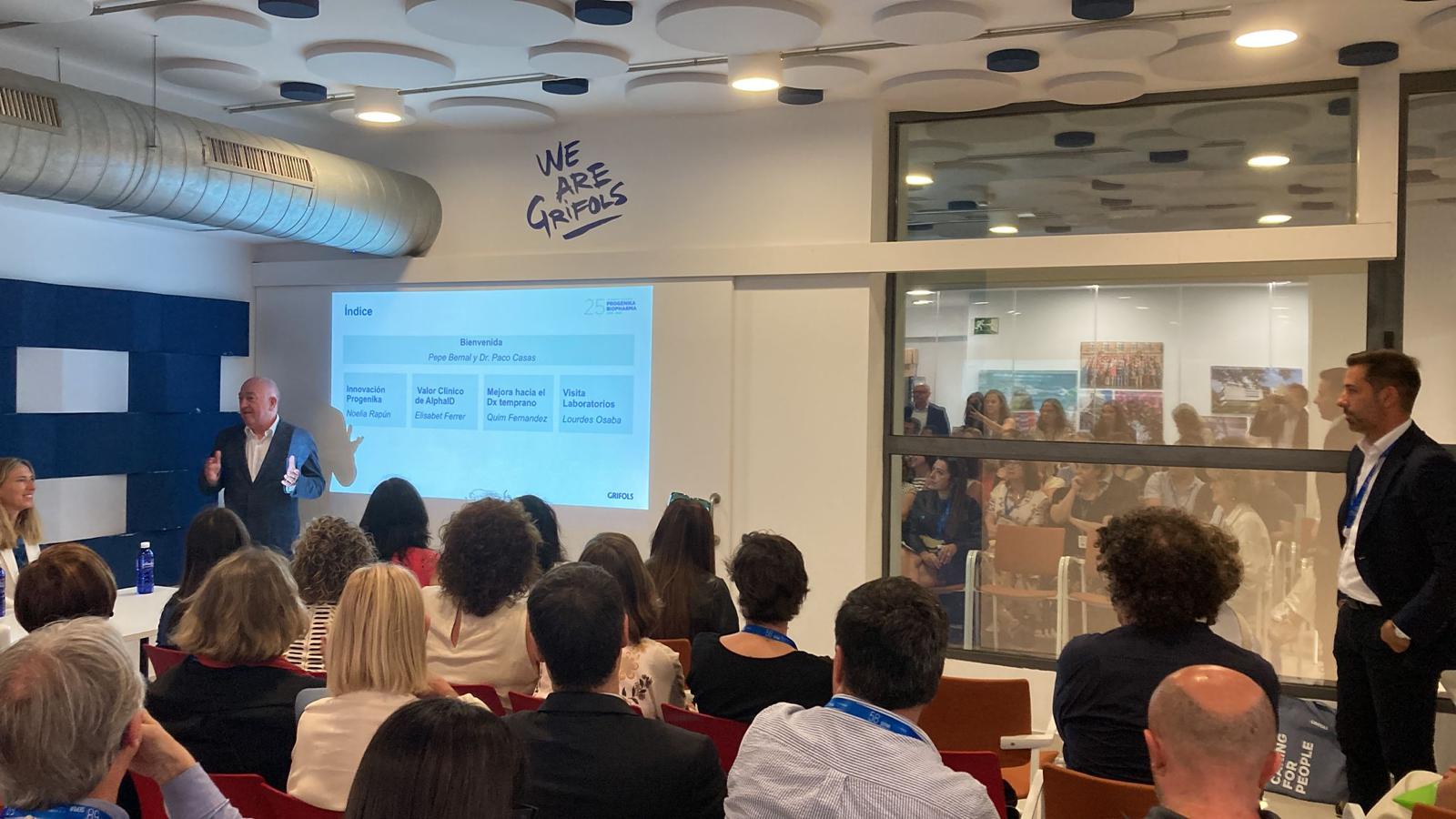
58th SEPAR Congress Meeting
Professionals José Bernal (Grifols) and Francisco Casas, member of REDAAT and coordinator of the Alfa-1 Andalusian Center in Granada, welcomed all attendees.
Dr. Casas, as coordinator of REDAAT, was one of the driving forces behind the REDAAT-Progenika diagnostic pathway (photo 1).
Dr. Noelia Rapún (Progenika) highlighted the technological innovation that Progenika provides for the diagnosis of AATD and other diseases.
Elisabet Ferrer (Grifols) emphasized the importance of the AlphaID device.
Finally, Quin Fernández (Grifols) presented the early diagnosis of AATD as an improvement to this pathway, and Lourdes Osaba (Progenika) explained the laboratory’s technical aspects.
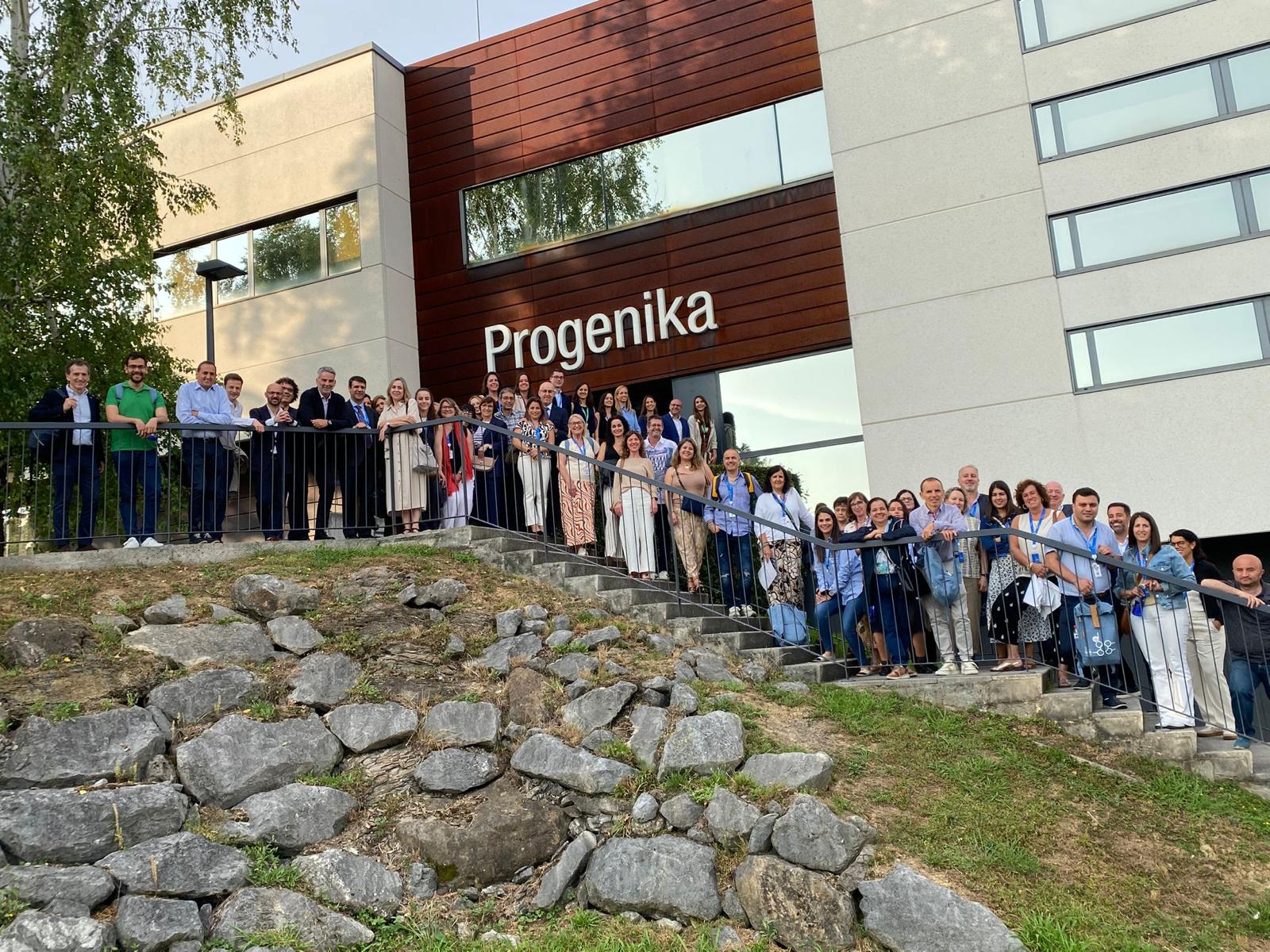
DECALOGUE OF THE SPANISH DAAT NETWORK
Alpha-1 antitrypsin deficiency (AATD) is an underdiagnosed genetic condition that predisposes to emphysema, chronic obstructive pulmonary disease (COPD), and liver cirrhosis.
Although it affects 2-3% of patients with COPD, its diagnosis remains a challenge in the Pulmonology clinic.
Early detection is crucial, as early treatment can make a significant difference in a patient’s life. The event will take place on Thursday, June 12, where the awards ceremony for the best projects and the winners of the 7th “Short Story” competition will be held.
DECALOGUE OF THE SPANISH DAAT NETWORK
What is the challenge?
Beyond improving awareness of AATD, easy-to-apply guidelines have been identified, the implementation of which can have a positive impact on several aspects related to the diagnosis and management of this pathology, as well as the management of patients with AATD:

1. Cut-off point for plasma alpha-1 antitrypsin (AAT) levels in clinical analysis laboratories according to guidelines.
Adopting the threshold of 116 mg/dL as a reference value increases diagnostic sensitivity and allows for early detection of all cases presenting a mutation.
A high percentage of heterozygosity cases are found between 90 mg/dL (the common reference value) and 116 mg/dL (the value recommended by the REDAAT to completely rule out AATD).
2. Confirmation of the existence of AATD. Automation of genetic screening.
Incorporate automatic alerts and recommend SERPINA1 gene genotyping when plasma levels drop below 116 mg/dL.
Genotyping can be performed through the hospital laboratory (S and Z alleles), using the Grifols Alpha ID tool (14 major deficiency mutations), or with complete sequencing of the SERPINA1 gene.
This provides a complete diagnosis.
3. Action protocol according to the allelic variants found and the concentration of alpha-1 antitrypsin.
Personalized action protocols: from preventive measures to multidisciplinary follow-up, each patient requires personalized care based on their genotype (ZZ, SZ, SS, etc.) and plasma levels to optimize resources and improve the patient’s clinical condition.
4. Nursing role in the genetic diagnosis of AATD.
Nursing involvement in performing genetic screening or confirmation tests for AATD in pulmonary function laboratories has been shown to improve early diagnosis, contributing to a comprehensive approach to the patient during functional testing consultations.
5. Determination of AAT levels in Primary Care (PC).
All primary care physicians should have access to AAT level ordering, as they are the patient’s first and primary contact. Enabling AAT level ordering in primary care is key to the early diagnosis of patients with COPD, unexplained liver disease, asthma, or bronchiectasis.
6. Criteria and requirements for the referral of obstructive patients from Primary Care.
Including AAT determinations in the PC referral protocol, along with other complementary tests, allows the specialist to act with the necessary information from the outset.
Likewise, patients who have already been identified with levels below 116 mg/dL in PC should be referred to a specialist for evaluation.
7. Establish indicators for improvement in clinical practice.
Underdiagnosis of AATD continues to occur in more than 60% of cases. Establishing healthcare quality indicators, such as the proportion of COPD patients with AAT, is key to detecting deviations, promoting audits like EPOCONSUL, and transforming clinical practices. Objective: exceed 95% coverage.
8. Diagnostic and treatment protocols for AATD.
For diagnosis, use the REDAAT algorithm, which offers two initial approaches:
Serum quantification (along with PCR) or initial genotyping. Once the diagnosis is confirmed, early augmentation treatment with intravenous AAT slows the decline in lung function and density and improves life expectancy.
9. Multidisciplinary and personalized approach to the diagnosed patient.
The approach should be tailored to each patient’s clinical, personal, and social factors, including self-management programs and psychological, nutritional, and physical support.
It is necessary to create a structure among the specialties involved to create synergies that can reduce the impact of the disease.
10. Closer collaboration between specialties with exposure to AATD
Communication between Pulmonology and Pediatrics ensures a smooth transition for young patients into adulthood.
The creation of both pediatric and adult liver-lung teams is necessary, integrating Internal Medicine, Geriatrics, and other relevant disciplines.
A call to action
An early diagnosis, along with appropriate treatment, can make a significant difference in the life of a patient with AATD.
The current healthcare situation in different regions of Spain requires a review of the level of application and implementation of these points at the local level to continue advancing in the management of AATD.
Source: SEPAR